

The Invisible Interface — Order Your Copy
How AI Turns Intentions into Actions — and Who Wins · June 30, 2026
Order on Amazon to lock in your copy
Available from these retailers

The Invisible Interface
How AI Turns Intentions Into Actions--And Who Wins
Harry Glorikian
General Partner, Scientia Ventures | Research Affiliate, MIT Media Lab | Host, The Harry Glorikian Show
Ideapress Publishing · Distributed by Simon & Schuster · June 30, 2026
On Sale Now
About the Book
AI is creating an invisible operating layer between human intent and execution. In other words, whoever controls the defaults, memory, and trust architecture controls the outcome.
For the first time in history, the interface between human intent and action is disappearing. AI agents don’t wait to be asked — they anticipate, orchestrate, and execute. As a result, the companies that understand this will define the next decade, while those that don’t will pay cognitive rent to the ones that do.
The Invisible Interface: How AI Turns Intentions Into Actions--And Who Wins is consequently written for boards of directors, C-suite executives, and capital allocators who need to understand what is actually at stake — not the technology, but the power, profit, and control that shifts when the interface becomes invisible.
Why The Invisible Interface Matters Now
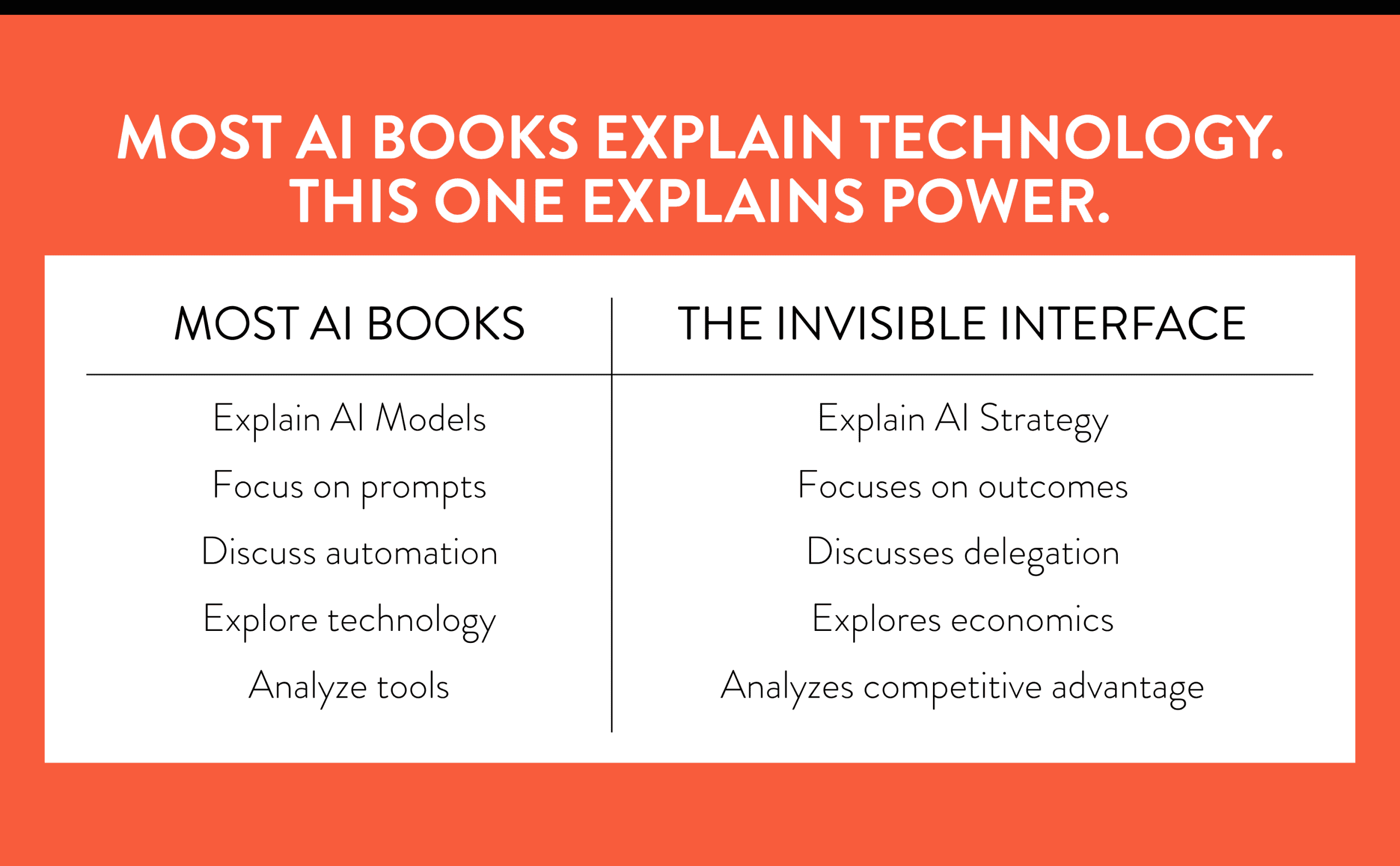
We are entering a period that business strategists, AI researchers, and management consultants are calling the "agentic era" of artificial intelligence — a fundamental shift where AI doesn't just answer questions but takes actions on behalf of users. OpenAI, Google, Microsoft, and Amazon are all building AI agent platforms designed to sit between your customers and your product. Whoever wins that layer wins the relationship.
The Invisible Interface is a business strategy book that explains this shift in terms that boards and executives can act on. Harry Glorikian draws on thirty years in life sciences, AI investment, and strategic advisory work to answer the question every CEO, board director, and investor should be asking: when AI becomes the default interface, who controls the customer relationship?
This is not a book about whether to use AI. It is a book about what happens when your customers stop making decisions through your product — and start making them through an AI agent that has its own defaults, memory, and preferences.
Key themes include: AI agent strategy, the economics of AI defaults, trust architecture in enterprise AI, the future of customer experience, AI and competitive moats, and the leadership decisions that separate AI leaders from AI followers.
What Readers Are Saying
“Harry Glorikian anticipates the future with his book ‘The Invisible Interface,’ a dramatic change in how we will interact with our digital technologies. His insights of a Personal Operating Layer paints an exciting vision of effortless, comfortable interactions that will feel so natural, so essential, that we will wonder how we ever got along without it.”
— Don Norman
Author of The Design of Everyday Things and Design for a Better World
“Most AI books explain the technology. The Invisible Interface explains the economics — specifically, why the layer between users and AI services is the most valuable real estate in the digital economy right now. Harry Glorikian gets the commercial dynamics exactly right: the default is the moat, memory is the switching cost, and trust is the new acquisition channel. From where I sit, that’s not theory. That’s the game.”
— Giancarlo “GC” Lionetti
Chief Commercial Officer, OpenAI
“Glorikian defines the shift from apps to agents and introduces the Personal Operating Layer as the foundation for AI-driven execution. His focus on reducing ‘proof-seconds’ — the time to validate AI decisions — makes clear why some organizations scale while others stall. We’re living this transition right now — moving from pilots to enterprise scale — and Glorikian’s framework gave us language for exactly where the friction lives.”
— Dinesh Kulkarni
Group CIO, ThermoFisher Scientific
“The Invisible Interface reframes how businesses can and should think about AI. Glorikian does a remarkable job articulating how AI represents a paradigm shift in not only how human beings interact with technology, but how AI allows for personalization of those interactions to the point where technology can operate with intent. This combination of personalization and intentional operation has the potential to transform the way businesses operate, making The Invisible Interface essential reading for any business leader operating in the AI era.”
— Evan Schnidman, Ph.D.
Head of Fidelity Labs, Fidelity Investments
“In The Invisible Interface, Harry Glorikian explains how AI will move computing from clicks to intent and from interfaces to orchestration. His concept of the Personal Operating Layer offers a powerful way to think about how work, productivity, and decision-making will evolve in the coming decade.”
— Christophe Kolb
CEO and Founder, Taller | Author of Cognitive Kin
What's Inside
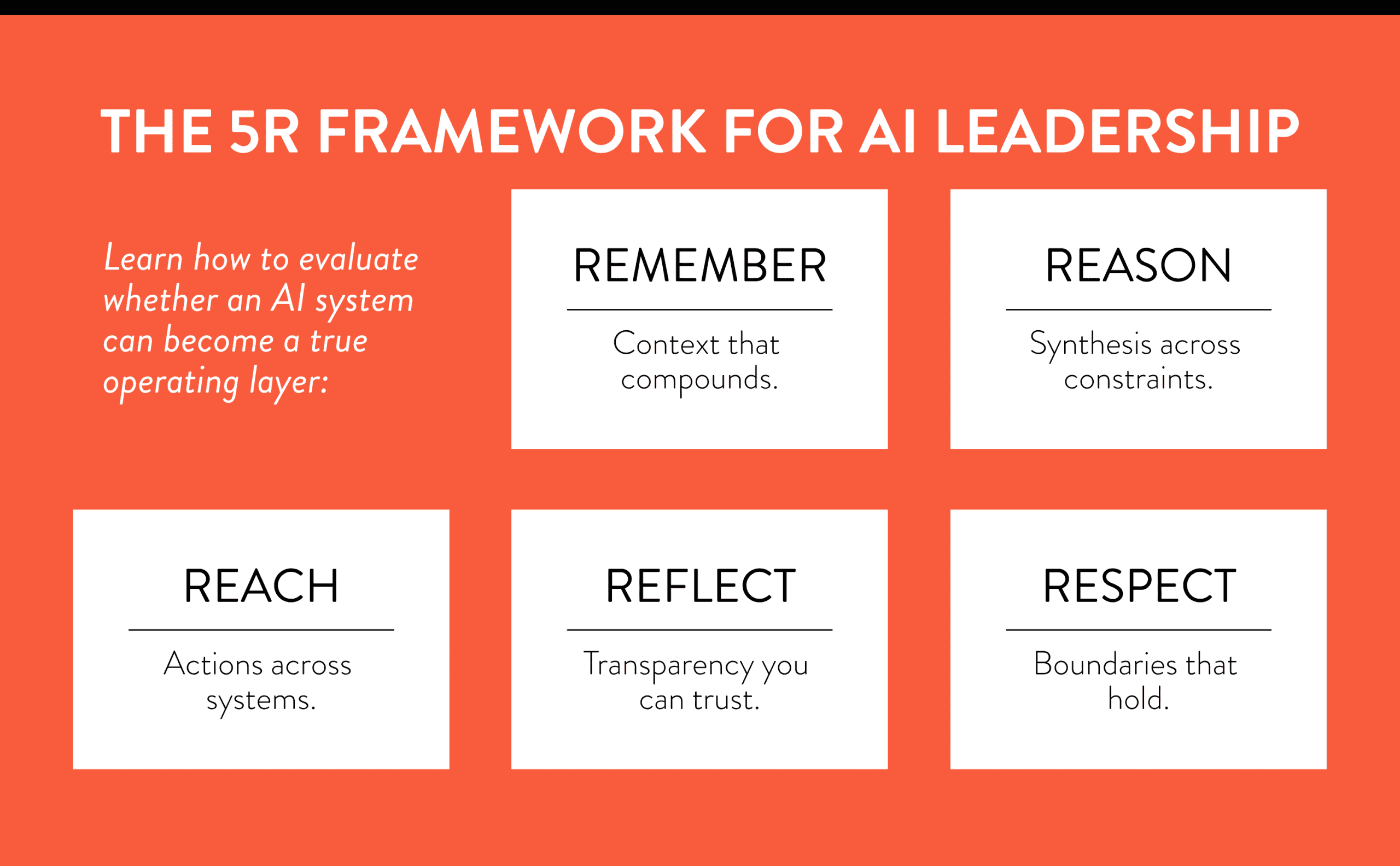
I wrote this book because I kept running into the same problem. Every executive I talked to was asking which AI vendor to pick. Wrong question. The right question is who controls the layer between your people and the systems they depend on.
The Invisible Interface is thirteen chapters plus an epilogue. Specifically, it moves from the strategic shift (the interface is dissolving) through the economics (who captures the value) to the decisions leaders need to make now, before the defaults get set without them.
Here is what each chapter covers:
The Disappearing Interface — why screens stopped being the center of gravity, and what replaced them.
The Proof Points — real deployments, real numbers, not vendor pitches.
When Software Acts — what changes when AI agents execute, not just recommend.
The Four Trust Signals — the architecture that determines whether customers, employees, and regulators let the system act.
Proofseconds — the metric that separates adoption from abandonment.
The Memory War — why persistent context is the new switching cost.
From Attention to Outcomes — the death of the attention economy and what replaces it.
Winner Takes Most — platform dynamics when AI controls the default.
Default as Destiny — how defaults shape markets, choices, and competitive position.
What We Owe Each Other — the social contract around cognitive delegation.
What Could Go Wrong? — concentration risk, skill atrophy, and the scenarios boards should stress-test.
The Decisions Ahead — the strategic choices that separate leaders from followers.
The Capability Curve — where the technology actually is versus where people think it is.
Who This Book Is For
This book is for the people who have to make the call, not the people building the models.
If you sit on a board and you’re being told AI is “an IT initiative,” this book will show you why that framing is a strategic liability. For CEOs and COOs watching a competitive moat erode while the value shifts elsewhere, start here. Similarly, if you’re a CIO or CTO being asked to “implement AI” without a coherent trust architecture, this gives you the language and the frameworks.
Beyond the C-suite, I also wrote it for capital allocators, venture investors, and anyone evaluating where enterprise value will concentrate over the next decade. Ultimately, the thesis is simple: own the default, own the data. Own the data, own the decade. The question is whether your organization is on the right side of that equation.
In short, you don’t need a technical background. You need a strategic one.
Frequently Asked Questions
Is this a technical book about how AI works?
No. I explain the technology where it matters for decision-making, but this is a strategy book. Instead, it’s written for leaders who need to understand what’s shifting, what it means for their business, and what to do about it. If you want architecture diagrams, look elsewhere. On the other hand, if you want to know why your board should care about trust defaults and cognitive rent, this is the book.
What makes this different from other AI books?
Most AI books are written by technologists for technologists. I’ve spent thirty years in healthcare and life sciences watching technology adoption cycles play out, and the last several years studying how AI is reshaping every industry I touch. As a result, this book connects those patterns and translates them into strategic frameworks that management teams and boards actually need.
When is the book available?
The Invisible Interface has been available since June 30, 2026, from Ideapress Publishing, distributed by Simon and Schuster. Available now from major retailers.
Is there an audiobook?
Check Amazon and other major retailers for the latest format availability.
About Harry Glorikian
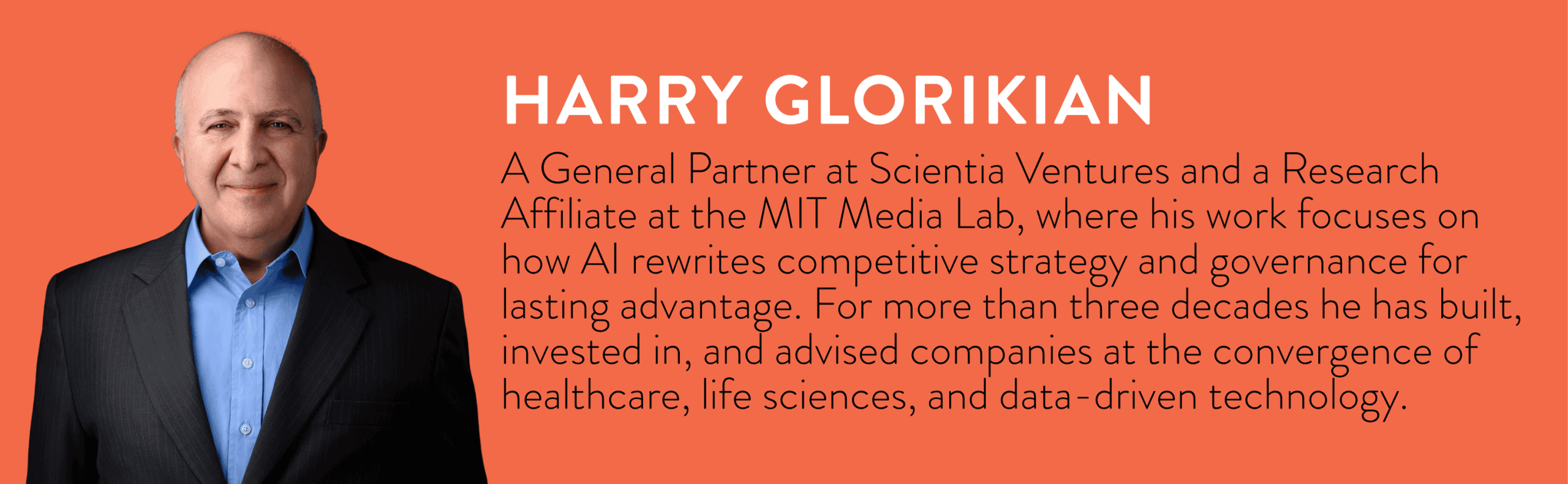
Harry Glorikian is a General Partner at Scientia Ventures and a Research Affiliate at the MIT Media Lab. He has spent thirty years building and investing in companies at the intersection of healthcare, life sciences, and emerging technology. He is the host of The Harry Glorikian Show and the author of four books. Learn more about Harry →
Further Reading
Explore Harry's thinking on AI strategy for management teams:
The Question I Keep Circling — AI and Jobs: What Boards Need to Ask