

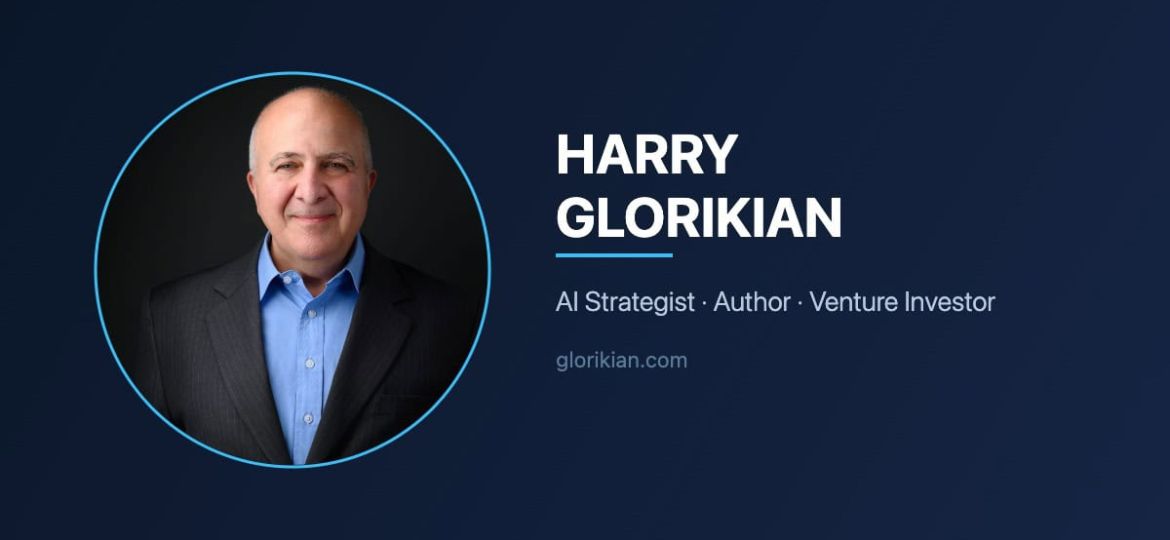
AI Strategy: The Invisible Shift Every CEO Must Understand
Harry recently joined Omar Khateeb on The State of MedTech podcast for a wide-ranging conversation about how artificial intelligence is quietly redrawing the relationship between people, software, and decision-making inside organizations. Watch the full episode below.
The conversation centers on a theme from Harry’s book, The Invisible Interface: the real disruption isn’t any single AI model, it’s the way the interface between human intent and action is disappearing. Where earlier computing eras forced people to adapt to command lines, desktops, and then the web, today’s systems increasingly adapt to the person using them, which means employees stop operating software step by step and instead delegate entire outcomes to an AI layer working on their behalf.
Harry and Omar dig into what that looks like in practice, from agents that comb through email and calendars to identify follow-ups, to enterprise workflows where AI drafts blog content, tracks competitors, and surfaces a first pass for a human to review and approve. Harry describes this emerging layer as a kind of personal operating system sitting between intention and execution, one that becomes more capable and more deeply embedded in daily work the more organizations lean into it.
Healthcare and medtech get particular attention. Harry argues that the regulatory environment is shifting faster than many incumbents expect, and that hardware alone is no longer enough to hold a competitive position. Once a device or platform works reliably, he says, the real battle moves to the software and intelligence layered on top of it, an area where nimble smaller companies can move just as fast as, or faster than, larger competitors.
The two also explore the tension between efficiency and what Harry calls cognitive atrophy, the risk that comes from leaning on AI so heavily that human judgment and skills begin to fade. He points to research on clinicians and AI-assisted diagnostics as a caution: organizations need to design workflows that keep people engaged and checking the system’s work rather than rubber-stamping it. That balance, along with the growing importance of being the default choice that AI agents recommend to customers, forms much of the strategic backbone of the discussion.
It’s a conversation aimed squarely at founders, executives, investors, and healthcare leaders who are trying to figure out not just how to use AI tools, but how to redesign their organizations around them.
State of MedTech Podcast: Key Takeaways on AI Strategy
For more background on how AI is transforming clinical and business decisions in healthcare, see the U.S. Food and Drug Administration’s overview of Software as a Medical Device, a regulatory framework relevant to many of the AI tools now entering clinical workflows.
NEW BOOK
The Invisible Interface
Harry Glorikian’s new book explores how AI is quietly rewriting who controls your customer relationships, your workflow, and your competitive edge — before most executives realize it’s happening. Available now.